
We Tested the Best RV Water Filters: Here’s What Actually Tastes Good and Works on the Road

Introduction
Does brown water coming out of the campground spigot kind of terrify you? It definitely did for us. On our first camping trip to Charlestown State Park, something seemed “off”… the water tasted horrible! It had a high iron content, came out some nasty color, and tasted just as bad. That experience kicked off our quest to find the best RV water filter once and for all.

As a part-time RV family who’s used the Camco TastePure filter along with our Beech Lane dual-stage filters for years, we started asking ourselves a tough question: Is this really the best option out there? Are we actually putting the best water into our bodies? After all, we’re all about living a long, healthy life.
After five years of “convincing” ourselves the water tasted fine campground after campground, we decided it was time for a full-scale test. No more guessing. No more influencer hype. We wanted to know for ourselves — which inline filter actually delivers the cleanest, best-tasting, and safest water for RV life?
So we grabbed five of the most popular filters — including options from RV Guard, Camco TastePure, Aqua Crest, Clear2O, and Kohree RV Water Filter — and tested them all using Louisville tap water as our base case. Why Louisville? It gave us a consistent control for comparison, and frankly, it’s what we drink most often when we’re not on the road.
Before we jump into cartridges and canisters, take 90 seconds to see how your RV’s entire water system operates—it’ll make every filter choice in this guide click.
This post walks you through our hands-on RV water filter reviews — the taste tests, the testing kits, the surprises, and even which filter we’re officially ditching (spoiler: it’s the one we thought would perform best).

If you’re wondering which filter to use when filling your RV’s water tank or whether it’s worth adding a second filter under your kitchen sink, you’re in the right place.
Before we dive into which filters actually work, let’s address the elephant in the RV: not all bad-tasting water means you need a better filter. Sometimes the issue is the campground’s water supply, sometimes it’s your system maintenance. First, figure out what’s causing the problem →, then come back here to choose the right filter solution.
Let’s jump in. 💧
🎯 Just Tell Me What to Buy
Not sure where to start? Here’s our quick recommendation based on your situation:
Pro tip: Most RVers start with Kohree or RV Guard, then add Beech Lane when they’re ready to upgrade. That’s exactly what we did.
From sketchy campground spigots to crystal‑clear confidence.
Answer a few quick questions and get your personalized RV water filter match.
Too Long; Didn’t Read (TL;DR)
If you’re just looking for the best water filter to start with, go with the Kohree RV Water Filter — great taste, solid performance, and no setup headaches.

And if you want to low down on the which RV water filters are worth it — here’s the condensed version of our real-world testing:
🚐 Kohree RV Water Filter is our new go-to. It’s easy to use, tastes great, and gives excellent value.
💧 RV Guard is a close second — clean-tasting, affordable, and reliable.
📊 Aqua Crest gave us the lowest PPM readings — great numbers, average taste.
🔄 Beech Lane Dual Filter System is our top upgrade pick: two-stage filtration, brass fittings, built to last, and way more affordable than Clear Source.
🚿 Waterdrop 10UA Under Sink Filter polishes the water perfectly at the kitchen faucet. Clean, crisp, and certified.
🧊 Our full setup = Inline filter → Beech Lane → Waterdrop under sink. It’s the sweet spot for taste, filtration, and flexibility. Quick Tip – “Before your filter, it’s smart to use a water pressure regulator.
Not sure which regulator to buy? We tested the top models and found one that’s accurate, durable, and won’t break the bank—see our complete water pressure regulator buying guide.
⏸ Camco is officially retired.
👎 Clear2O didn’t live up to the hype (or the price).

NSF Certified
Improved Taste & Smell
Cost-Effective Filtration
⚠️ Pro tip: Don’t forget to winterize your RV water system before storing your camper. Check out our RV winterization guide and video walkthrough for step-by-step help.
If you’re new to RV water systems and want to understand how filters fit into your entire plumbing setup—from freshwater tank to gray and black water dump—start with our complete beginner’s guide to how RV water systems work. Your whole system will finally make sense.
Why Water Filters Matter for RV Life
When you’re adventuring across the country, your water source changes just as often as your zip code. One night you’re parked at a well-maintained campground with crisp city water — the next you’re hooked up to a mystery spigot behind a bait shop. 🫣 That unpredictability makes RV water filtration more than just a nice-to-have. It’s essential.
A good RV filter setup means you can stop relying on bottled water — which saves space, money, and cuts down on plastic waste. Clean input water protects all three of your RV’s tanks—fresh, gray, and black—from sediment buildup and premature wear.
Not All Water Sources Are Created Equal
Whether it’s from a city supply or a private well, the quality of water at RV parks can vary wildly. We wanted to find out which filter truly delivered safe water for our family, not just water that looked or smelled okay.
You might be dealing with high levels of chlorine, iron, sediment, or even volatile organic compounds (VOCs) — and let’s not even talk about the weird smells. We’ve personally experienced everything from water that looked perfectly clean but tasted awful, to water that came out orange and gritty.
VOCs are a real concern for RVers — especially families. According to the U.S. Geological Survey, exposure to VOCs in drinking water can have both immediate and long-term health consequences:
- Short-term symptoms can include headaches, nausea, dizziness, and irritation of the eyes and throat.
- Chronic exposure to compounds like benzene and trichloroethylene (TCE) has been linked to cancer, organ damage, and neurological disorders.
- Some VOCs even disrupt hormonal and immune system function — posing a higher risk for children, pregnant individuals, and those with preexisting health conditions.
The report also notes that activated carbon and reverse osmosis systems are among the most effective filtration methods for reducing VOCs.
That’s why a solid RV water filtration system — starting with an inline RV water filter at the spigot — is so important.
And if you’re filling your fresh tank from a campground spigot, doing it the right way prevents air locks, overflow messes, and contamination. Here’s our step-by-step guide to filling your RV water tank safely and efficiently.
If you’re exploring other ways to purify campground water beyond filters, we cover gravity systems and off-grid options too.
It’s Not Just About Taste — It’s About Health
Sure, everyone wants great-tasting water. But when you’re on the road with kids, you also want safe drinking water that supports a healthy lifestyle. Unfiltered water can contain heavy metals, bacteria, and a cocktail of other harmful substances — and if your filter isn’t doing its job, you may not even know what you’re ingesting until it’s too late.
Filtering water also protects your RV’s plumbing, appliances, and fixtures by reducing sediment and mineral buildup. That means fewer maintenance headaches — and potentially avoiding costly repairs to things like your RV water pump or kitchen sink faucet.
Want to make sure your entire system is RV-safe?
🧼 Sanitize Your Fresh Water Tank Seasonally
Even the best filters can’t fix a dirty tank. We sanitize our fresh water system twice a year using a simple bleach solution—it keeps everything tasting fresh and prevents buildup. Here’s our complete step-by-step guide to sanitizing your RV fresh water tank, including exactly how long to leave bleach in your system for maximum effectiveness.
We also reviewed the best RV toilet paper options for black tank health.
Meet the Inline RV Water Filters We Tested
After years of using the Camco TastePure, we were curious: could other filters do better? We selected five popular and widely available inline RV water filters to test side-by-side. Some were Amazon favorites, others were brands we’d seen recommended in Facebook RV groups or on YouTube. We even revisited Camco to see how it held up.
The Filter Lineup
Here’s who made the cut:
- Camco TastePure – Our longtime go-to, advertised as the #1 RV water filter in America.
- RV Guard – A highly rated and affordable filter found on Amazon.
- Aqua Crest – Another Amazon favorite, known for solid performance and ease of use.
- Clear2O – A premium filter claiming to deliver superior water thanks to a 1-micron rating.
- Kohree RV Water Filter – A newer entry we tried after good results from their drinking water hose.
📊 Complete Filter Comparison: Side-by-Side Specs
We tested these filters with the same water source, same testing equipment, and same family taste-test panel. Here’s everything you need to know:
🔍 Reading the Table:
- Micron Rating: Lower = finer filtration (0.5 removes sediment, chlorine, VOCs; 0.2 adds virus protection)
- Flow Rate (GPM): Gallons per minute – higher = faster tank fills (3-5 GPM is ideal for most RVers)
- KDF: Kinetic Degradation Fluxion (removes heavy metals + chlorine)
- GAC/ACF: Granular/Advanced Activated Carbon (taste/odor improvement)
- Capacity: How many gallons before replacement needed
Each filter had its own design quirks, connection style, and claims — from multi-stage carbon filtration to NSF certifications and promises of a high flow rate. We also looked for extras like quick connects, stickers to track install dates, and clear instructions.
Why These Filters?
- Availability: All are easily purchased online through Amazon or big-box retailers.
- Affordability: We wanted options that wouldn’t break the bank — all of these retail between $15 and $45.
- Popularity: We chose filters that other RVers are actually using right now — not just theoretical top picks.
Our Real-World Testing Method
We wanted our RV water filter reviews to be more than just opinions — so we designed a hands-on test using both quantitative data and taste testing. Here’s how we put these filters through their paces.
Consistent Testing Water: Louisville City Tap
To ensure a fair comparison, we used Louisville’s city water — our everyday water source — as the control. It’s what we use at home when we’re not traveling, and it gave us a known baseline for measuring taste and quality differences.
Test Setup
Each filter was connected to the same Kohree RV Water Hose, flushed for several seconds, and then run into identical sample cups. We labeled each filter to avoid mix-ups and maintained the same flow pressure for all five.
From filters to RV hoses that don’t kink or smell, we’ve dialed in our whole setup for safety and performance.
🚐 Our Complete Setup (What We Actually Use)
After years of testing, here’s the exact system we run in our fifth wheel:
- Kohree Inline Filter at the spigot → Catches sediment, chlorine, VOCs
- Beech Lane Dual System → Two-stage protection before water enters tank
- Waterdrop 10UA under kitchen sink → Final polish for drinking/cooking water
Result: Crystal-clear, great-tasting water at every campground. Zero brown water surprises. Zero weird tastes.
Total investment: Under $150 for complete peace of mind.
Tools We Used
We didn’t just rely on taste. We used a few tools to get scientific:

- ✅ TDS (Total Dissolved Solids) Meter – Measures how many particles are in the water. Lower = better filtration.
- ✅ 4-in-1 Digital Water Tester – Recorded temperature, hardness, and parts per million.
- ✅ Test Strips – Checked for chlorine, lead, iron, fluoride, and more.

The Family Taste Test Panel
Our very scientific taste-testing team? The family! We poured filtered samples into labeled cups and recruited Sarah, Madeline, and Jack to rate the water on:
- Taste
- Odor
- Clarity
- Overall preference
This gave us both objective measurements and the subjective opinions that actually matter when you’re connected to city water or filling your RV’s fresh water tank at the campground.
Filter Performance Results: Quality, Taste, and Value
After flushing, testing, and tasting each filtered sample, we came away with some clear winners… and a few surprises. Here’s how each filter stacked up across taste, clarity, measurable water quality, and overall value.
🚐 Our New Go-To: Kohree RV Water Filter
After everything we tested, Kohree RV Water Filter is the one we’re packing for our next several camping trips. It delivered great-tasting water, felt high-quality in the hand, and checked all the boxes we care about — without a hefty price tag.

- Taste: Fresh, pleasant, with no metallic or chemical notes
- PPM: 234
- Pros: Easy install, consistent flow, solid value
- Verdict: This is our top pick — practical, reliable, and tastes great

It’s also what we used while testing the best RV wash and wax methods — because filtered water helps prevent water spots on your rig.
Disclosure: Kohree did send us a complimentary inline water filter to test. As always, our ratings and recommendations are based entirely on real-world testing and honest results — their product earned our top spot fair and square.
💧 Most Refreshing Taste: RV Guard
RV Guard water was clean, crisp, and honestly surprised us with how good it tasted. It’s affordable, durable, and includes extras like install date stickers. Definitely one to keep in rotation.

- Taste: Neutral and refreshing
- PPM: 229
- Pros: Affordable, solid performance, good clarity
- Verdict: Excellent tasting water for the price

Certified for Safety & Performance: IAPMO R&T certified to NSF/ANSI 42 standards for material safety and chlorine reduction.
KDF & GAC Filtration: Combines Kinetic Degradation Fluxion (KDF) and Advanced Granular Activated Carbon for improved water taste and clarity.
High Capacity: Filters up to 15,000 gallons (5 GPM).
📊 Best Numbers on Paper: Aqua Crest
Aqua Crest delivered the lowest total dissolved solids — which means it technically filtered out more than any other. It’s a great choice if you want measurable results, even if the taste wasn’t the family favorite.

- Taste: Clean but a little flat
- PPM: 190 (lowest)
- Pros: High-performing filtration, solid value
- Verdict: If metrics matter most to you, this is a strong pick

- 𝗡𝗦𝗙 𝗰𝗲𝗿𝘁𝗶𝗳𝗶𝗲𝗱: NSF/ANSI 42 and 372 Standard.
- 𝗧𝗿𝗶𝗽𝗹𝗲 𝗧𝗲𝘀𝘁𝗶𝗻𝗴, 𝗤𝘂𝗮𝗹𝗶𝘁𝘆 𝗔𝘀𝘀𝘂𝗿𝗮𝗻𝗰𝗲: Can reduce multiple harmful substances like cadmium, heavy metals, hydrogen sulfide, iron, mercury
- 𝗤𝘂𝗶𝗰𝗸 𝗶𝗻𝘀𝘁𝗮𝗹𝗹𝗮𝘁𝗶𝗼𝗻 𝗶𝗻 𝟱 𝗺𝗶𝗻𝘂𝘁𝗲𝘀
- 𝗟𝗼𝗻𝗴-𝗹𝗮𝘀𝘁𝗶𝗻𝗴 𝗦𝗲𝗿𝘃𝗶𝗰𝗲 𝗟𝗶𝗳𝗲: Lasts for three months
😬 Camco TastePure: Familiar but Fading
We’ve used Camco filters for years — but side-by-side, it couldn’t compete. The taste wasn’t bad, just noticeably duller compared to the rest.
- Taste: Slightly stale and muted
- PPM: 207
- Pros: Trusted name, easy to find
- Verdict: Still “okay,” but we’re officially upgrading
👎 Least Impressive: Clear2O
This one came with high expectations… and fell short. Despite advertising a 1-micron rating and premium build, the taste and test results didn’t justify the cost.
- Taste: Bland and oddly filtered
- PPM: 221
- Cons: Overpriced for the performance
- Verdict: We’ll be skipping this one next time
🔍 Inline RV Water Filter Comparison Summary
| Filter | 🚰 Taste Rating | 📉 PPM (TDS) | 💸 Value | 📦 Verdict |
| Kohree RV Water Filter | 😋 Fresh & clean | 234 | ✅ Excellent | 🚐 Our new go-to |
| RV Guard | 🧊 Crisp & neutral | 229 | ✅ Great | 💧 Strong contender |
| Aqua Crest | 🙂 Clean but flat | 190 🥇 | ✅ Good | 📊 Best numbers |
| Camco TastePure | 😐 Muted & dull | 207 | ✅ Okay | ⏸ Time to retire |
| Clear2O | 😕 Flat & underwhelming | 221 | ❌ Overpriced | 👎 Not worth it |
Understanding Your RV’s Water Tank and Plumbing
Water filters aren’t just about what comes out of the faucet — they also play a big role in protecting what goes into your RV’s water system.
Filter Before It Hits the Tank
Whether you’re connected to city water or filling up for a boondocking trip, it’s crucial to filter the water before it enters your RV’s fresh water tank. Why? Because anything that goes into your tank stays there — and unfiltered contaminants can affect both water quality and your entire RV’s plumbing system.
Using an inline RV water filter at the hose connection point helps screen out sediment, chlorine, and other harmful substances before they can build up inside your RV water tank. This helps extend the life of your water pump, protects plumbing lines, and keeps maintenance issues at bay.
Better Tasting Water at the Kitchen Faucet
Even with inline filtration, water can still taste different once it’s passed through your system — especially if your tank isn’t cleaned regularly. For families who are sensitive to taste or who drink a lot of water straight from the kitchen sink, it may be worth installing a second filter under the counter.
Here are two great pairing options:
- 💧 Under-Sink Carbon Block Filter – Improves flavor and odor
- 🚫 Reverse Osmosis (RO) System – Removes VOCs, heavy metals, and more (requires tank space and possible modifications)
Using this two-filter setup — one at the spigot and one at the sink — gives you clean water going in, and great-tasting water coming out. It’s a small upgrade that can make a big difference, especially for longer trips or full-time RVers.
If you’re constantly dealing with bad-tasting water at different campgrounds, it’s time to upgrade your filtration strategy. Start by understanding why your water tastes bad →, then let’s find the right filter for your situation.
Under-Sink Filters for Kitchen Faucet Taste
Filtering the water as it enters your RV is step one — but if you’re particular about how your water tastes at the tap (especially at the kitchen sink), you might want to double down.
When Inline Isn’t Enough
Even with the best inline RV water filter, sometimes you want water that tastes extra clean, especially for drinking or cooking. That’s where an under-sink water filtration system comes in — and for our family, this has made a noticeable difference.
We’re currently using the Waterdrop 10UA Under Sink Water Filter System and absolutely love it. At just over $50, it’s an affordable, compact, and NSF/ANSI-certified filter that tackles:
- PFAS / PFOA / PFOS
- Chlorine
- Lead and heavy metals
- Rust, sediment, and chemical odors
It connects directly to your cold-water line under the sink and is rated for 8,000 gallons — which lasts us about a year with regular use. The installation was super straightforward, and the taste? Clean, crisp, and pure — exactly how we like it.
💬 “A reverse osmosis system would be awesome, but it hasn’t been in the budget… yet.”
Best of Both Worlds
We’ve found the ideal setup is using a two-stage approach:
- An inline RV water filter at the spigot to clean water before it ever enters your RV’s water tank
- An under sink filter (like our Waterdrop) to polish the taste at the faucet for cooking, drinking, and coffee-making
- This two-stage setup gives us a complete RV water filter system that protects our plumbing and delivers great-tasting water straight from the faucet.
This gives you:
- ✅ Cleaner water throughout your system
- ✅ Great-tasting water at the kitchen faucet
- ✅ Peace of mind knowing you’ve reduced contaminants and protected your health
If you want to upgrade later, a reverse osmosis system is a great option — but for now, the Waterdrop 10UA gives us everything we need to enjoy our adventures with confidence.
⚠️ Pro tip: Make sure to disconnect your under-sink filter during the winter months if your camper goes into storage. You don’t want it to freeze and crack when the temperature drops. We cover this in more detail in our RV winterization guide and winterizing video tutorial.
Check out our RV wash and wax guide for how to clean your RV after storage.

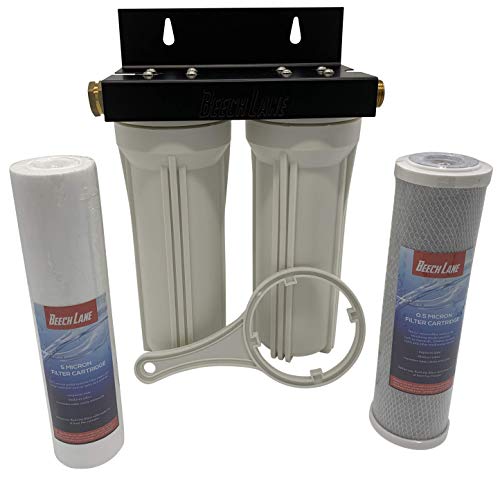
Beech Lane External RV Dual Water Filter System
Cleaner, Safer Water
Leak-Free Confidence
Worry-Free Ownership
Gravity Filters like the Travel Berkey: Worth the Space?
If you’ve been around the RV world for long, chances are you’ve heard someone rave about the Travel Berkey. These gravity-fed water filters have a bit of a cult following — and after watching hours of YouTube reviews, we totally get why.
We haven’t tested one ourselves (yet — Berkey, if you’re reading this, we’d love to change that!) but based on what we’ve learned, the Travel Berkey is one of the few filters that tackles both biological contaminants and chemical pollutants, including VOCs, lead, and fluoride.
➡️ Want to understand why that matters?
- 🎥 Watch this quick YouTube explainer on VOCs
- 📘 Read this in-depth VOC guide from Olympian Water Testing
- 🎥 Check out this Berkey review video for real-world insights
What Makes It Stand Out?
- ✅ Filters down to a microscopic level — including bacteria, viruses, and VOCs
- ✅ Doesn’t require electricity or plumbing
- ✅ Great for boondocking or off-grid trips
- ❌ Larger footprint — takes up space on your counter
- ❌ Slower output, not ideal for high-volume use
Our Take
We haven’t tested one (yet), but we’re seriously considering it as a boondocking or emergency backup system — especially when we know the campground water is questionable. If you’ve got the space and want maximum filtration, this seems like a powerful tool to have onboard.
Not Ready for a Berkey? Try This Budget-Friendly Hack
If you’re not quite ready to splurge on a Travel Berkey, there’s a much more affordable alternative that works great for short trips or weekend camping: collapsible water containers.
One of our favorites is the WaterStorageCube BPA-Free Collapsible Water Container, available in sizes ranging from 1.3 to 5.3 gallons. At just $13.25 for the 5.3-gallon version, it’s a compact, reusable option that you can fill at home (or from a filtered source), then dispense throughout your trip.
✅ Why we love it:
- Foldable and super space-saving — perfect for RVs or travel trailers
- BPA-free, odorless, and doesn’t affect water taste
- Durable spigot with good flow and leak-proof design
- Great for boondocking, emergency prep, or even handwashing stations
Whether you want to skip sketchy campground water altogether or just want a low-maintenance backup for drinking water, these containers are a smart addition to your gear list — especially for part-time RVers.
Ready to upgrade from spigot roulette to crystal‑clear confidence?
Take the quiz now and we’ll send your personalized result + our best RV water & internet tips straight to your inbox.
🔧 Specialty Filters for Specific Needs
Not everyone needs the same setup. If you have hard water or unique situations, these specialty filters solve specific problems:
💡 Pro Tip: Many RVers run a softener BEFORE their filter system when dealing with extremely hard water. The softener protects your filters and extends their life.
Bonus RV Water Filter Tips for New Campers
Whether you’re just starting out or have a few trips under your belt, these practical tips can help you get more out of your RV water filtration system — and avoid some rookie mistakes.
💡 Use Quick Connects to Save Your Knuckles
Installing and removing water filters by hand can be a pain — literally. Investing in quick connects makes it faster (and way less frustrating) to hook up your inline RV water filter, especially when you’re setting up in the rain or in low light.
💧 Hard Water Making Your Life Difficult?
If you’re dealing with spotty dishes, soap that won’t lather, or scale buildup in your water heater, you need a softener BEFORE your filter system.
The OTG4-DBLSOFT Portable Water Softener is specifically designed for RVs:
- ✓ 16,000 grain capacity (lasts 2-4 weeks for most families)
- ✓ Easy regeneration with table salt
- ✓ Protects your filters and extends their life
- ✓ Portable and compact
Pro setup: Softener → Inline Filter → Beech Lane → Under-Sink = Ultimate water quality
Get the Water Softener →💧 Replace Filters Based on Use, Not Just Time
Some filters advertise 3-month or 6-month lifespans, but if you’re using them heavily (or running campground water through them often), they’ll clog up faster. Watch for signs like slow water flow or odd tastes — and keep a few spare filters on hand just in case.
🔬 Keep a Water Test Kit in Your RV
Not all bad water looks bad. A simple TDS meter and some test strips can help you detect chlorine, lead, or even bacteria in your water before it becomes a problem. We used this exact setup in our tests and recommend every camper carry one.
🚿 Clean Your Fresh Water Tank Seasonally
Even if you’re filtering water before it enters your tank, it’s smart to clean and sanitize your RV’s fresh water tank a couple times a year. Gunk builds up, and you’ll taste the difference—check out our guides on how to sanitize your RV fresh water system and how long to leave bleach in your RV fresh water tank for step-by-step instructions.
🚫 Don’t Forget to Winterize Your Water System
If your rig is stored during colder months, make sure to winterize everything — including under-sink filters, inline filters, hoses, and pumps. Left unchecked, frozen water can expand and crack your equipment. (Check out our full winterization guide and step-by-step video.)
Our Final Picks After Testing
After testing multiple filters and running both water quality metrics and real-world taste tests, here’s where we landed — from solid inline filters to our current three-stage setup for clean, crisp water everywhere in the RV.
🔌 Inline Filters: Simple and Solid
These filters attach at the campground spigot and are the first line of defense against sediment, chlorine, and VOCs.
- Kohree RV Water Filter – Our new daily driver; balanced taste and value
- RV Guard – Crisp-tasting and affordable; a reliable backup
- Aqua Crest – Best performance on paper with lowest PPM readings
- Camco TastePure – Longtime favorite, now officially retired
Beech Lane External RV Dual Water Filter System
Cleaner, Safer Water
Leak-Free Confidence
Worry-Free Ownership
🛠️ Our Full Setup: 3-Stage Filtration That Works
If you’re looking to go beyond a basic inline filter and want reliable, great-tasting water at every step, here’s what we use and love:
- Inline Filter (Kohree RV Water Filter or RV Guard) – Filters water before it enters the RV
- Beech Lane Dual Water Filter System –The Beech Lane system uses a 5-micron sediment filter followed by a 0.5-micron carbon filter, giving you two layers of protection against rust, dirt, chlorine, and other contaminants
- Waterdrop 10UA Under Sink Filter – NSF/ANSI certified, filters PFAS, chlorine, lead, and more at the faucet
Heavy-Duty RV-Specific Design
Dual Filtration System: 5-micron sediment filter and a 0.5-micron carbon block filter
Flexible Filter Replacement: Compatible many brands of filters!
Lifetime Manufacturer Warranty
This combo gives us:
- Cleaner water entering the RV water tank
- Added filtration and clarity before it reaches our plumbing
- Crisp, delicious water right from the kitchen sink
- Many of the filters we tested, including Beech Lane and Waterdrop, use carbon filters to reduce chlorine, improve taste, and remove harmful substances like PFAS and VOCs.
We’re confident this setup will serve us well — whether it’s a short camping trip, a cross-country adventure, or an extended boondocking stay.
🚫 What We’re Retiring
- Clear2O – High price, mid-pack performance. Didn’t impress on taste or test results.
- Camco TastePure – Trusty for years, but our taste tests showed it’s time for something better.
About Us
We are Mike and Sara, and our kids and dog are exploring the US while camping in our fifth wheel! Since the late 90s we have been exploring the great outdoors one hiking trail at a time. We introduced our kids to hiking while they were young and they love exploring new places. We call Kentucky home and we find ourselves exploring the state parks, national parks, and other wildlands in our area as often as we can!
Our RV camping journey began during the COVID-19 pandemic. Waking up close to the trails we love hiking was enough for us to get hooked on the camping lifestyle! Thanks for following our adventures!
