

Your RV Water System Is Fine—The Campground’s Water Isn’t
On our very first RV camping trip to Charlestown State Park, just 20 minutes from our home in Louisville, we turned on the spigot — and out came a brown, murky stream of water.
It looked bad. It smelled worse. And Sara’s reaction said it all: “We can’t use this… can we?”
At first, we thought something was wrong with our RV’s water system. Maybe we forgot to sanitize? Maybe something broke on the drive? The water looked so awful we braced for an expensive repair.
But after some quick checks, we realized the real issue wasn’t in our RV — it was at the source. The brown water was coming straight from the campground’s supply, not from anything inside our rig.
That one moment changed how we approach water on every trip.
If your RV water tastes weird, smells off, or looks suspicious, don’t panic. It’s incredibly common — and more often than not, it has nothing to do with your RV at all.
In this post, we’ll show you:
- How to figure out why your water tastes bad
- What you can fix immediately (without tools)
- Long-term solutions that actually work
- How to stop worrying and enjoy clean, safe water on every trip
Let’s make your RV water a source of comfort, not stress.
The Real Culprit (It’s Usually Not What You Think)
When your RV’s water tastes bad, it’s easy to assume something’s wrong inside your rig — maybe the water pump is failing, the water heater needs attention, or your fresh water tank has gone funky.
But here’s the truth: bad-tasting water usually comes from the campground itself. Not your RV.
That’s what we discovered on that first trip to Charlestown State Park. The water came out brown and smelled metallic — like a mix of rust and sulfur.
Here’s What Most New RVers Get Wrong About Bad-Tasting Water”
Our first thought? “What did we break? How much is this going to cost?”
We’d only owned the RV for 2 weeks. We assumed bad water meant something was seriously wrong with our system.

But here’s what nobody tells you: Bad water almost never means your RV is broken. It usually means the campground’s water supply is mineral-heavy, iron-rich, or just plain different from what you’re used to at home.
Once we understood that, everything changed. We stopped panicking and started problem-solving.
Many RV parks, especially those using well water, have water that’s heavy in minerals like iron or magnesium. You may also encounter sulfur (that rotten egg smell), or even trace amounts of hydrogen sulfide — all of which dramatically change the taste and smell of your water.
And if you’ve spent most of your life drinking soft, city-treated water (like we have in Louisville, where our water is filtered through natural limestone), you’ll notice those differences right away.
Your fresh tank doesn’t help either. If the water source already tastes off, storing it in a plastic container for any amount of time just amplifies that flavor.
Some places have naturally hard water, others may pull water from sources with high mineral content, or older holding tanks. There’s often no way to know in advance. So the problem might not be your RV water treatment system — it’s just what’s coming out of the tap.
When It Is Your System (And How to Tell)
Not all bad-tasting RV water comes from the campground. Sometimes, the issue is your setup — especially if the water’s been sitting or your system hasn’t been maintained.
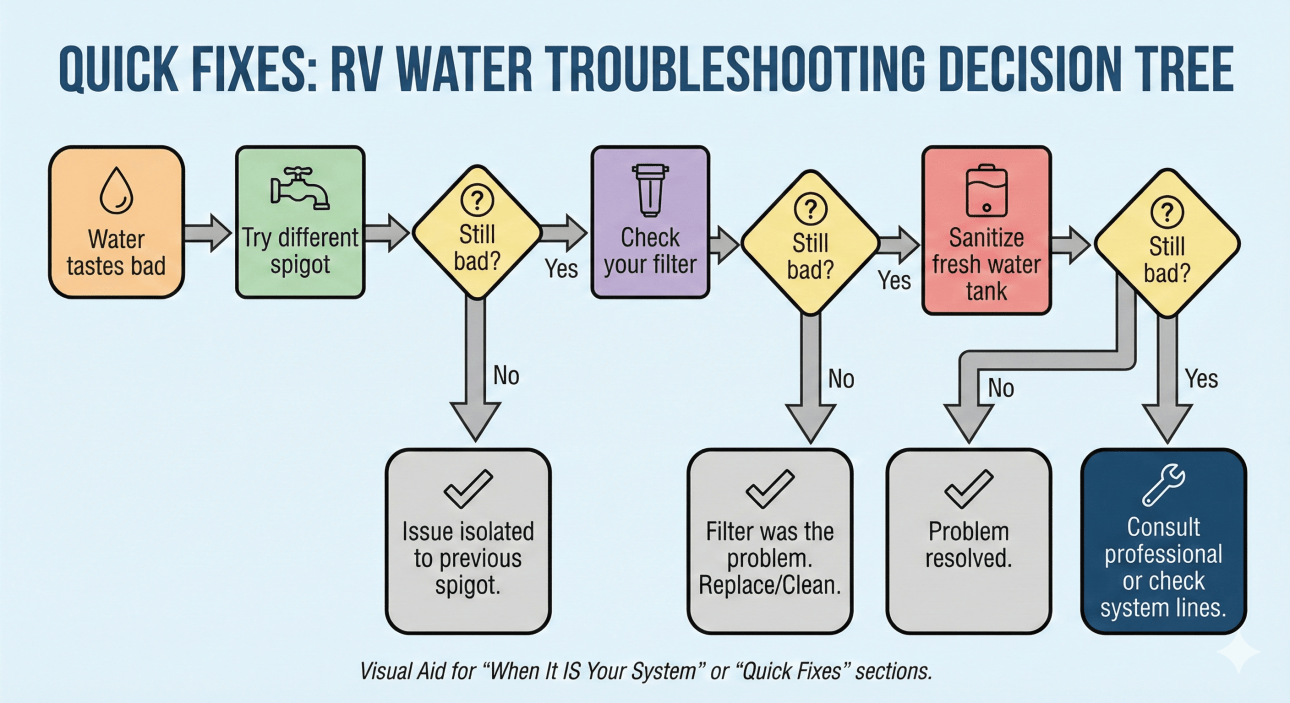
Here’s how to tell if the problem is inside your rig.
1. Water’s Been Sitting Too Long
If water has been left in your fresh water tank for weeks (or even just days in hot weather), it can start to taste musty, stale, or even plastic-like. This is especially true if you’re not running water regularly through your system.
Stagnant water can lead to bacteria growth, mold, or just a generally unpleasant taste — even if it looks clear.
Pro tip: If you’re a weekend adventurer, flush the remaining water after each trip. If you’re a full-time RVer, sanitize your system every couple of months for safe water and peace of mind.
2. Your Water Heater Needs a Flush
A metallic or sour taste often means your hot water tank needs cleaning. Over time, sediment buildup from minerals and heat can settle inside, causing strange odors or even reducing your water flow.
Using a vinegar cleaning solution is a safe, bleach-free way to flush it. And don’t forget to check your anode rod — it’s a small part, but it plays a big role in preventing scale buildup and corrosion.
A metallic or sour taste often means your hot water tank needs cleaning. Over time, sediment buildup from minerals and heat can settle inside, causing strange odors or even reducing your water flow.
Using a vinegar cleaning solution is a safe way to flush it. And don’t forget to check your anode rod — it’s a small part, but it plays a big role in preventing scale buildup and corrosion.
3. Your Filter Needs Replacing
Old inline water filters or under-sink filters lose their effectiveness over time. If your water smells okay but still tastes off, check your activated carbon or 5-micron sediment filter. Many RVers forget to replace these until it’s too late — especially if they don’t camp every weekend.
Replacing filters is your first line of defense for clean water. And if you’re using a dual-stage or RV water filter system, remember: the second filter often does the heavy lifting, so don’t overlook it.
If you haven’t sanitized your fresh tank in a while, that’s probably the issue. We went 5 years without doing it (don’t judge us), and when we finally did, the difference was night and day. Read our complete sanitization guide →
Quick Fixes You Can Do Right Now
You’ve just pulled into a new RV park, hooked up to city water, and turned on the faucet… only to discover the water smells weird or tastes awful.
Before you stress, here are a few simple things you can do to get clean, safe water fast — without diving into a full system overhaul.
1. Let Water Run Through Your Filter First
Before connecting your drinking water hose, always run water through your RV Inline Water Filter for a few minutes. This helps flush out any sediment, stagnant water, or lingering taste from the inline water filter before it ever enters your RV’s fresh water system.
It’s a small step that makes a noticeable difference in taste and water quality.
2. Try a Different Spigot
Not all campground spigots are created equal. If the water tastes off, try filling from a different one nearby. Sometimes a poorly maintained or less-used spigot can introduce rust or mineral content that’s not present elsewhere in the park.
3. Run the Water for a Few Minutes
Especially in hot weather, water lines and hoses can hold several gallons of water that have been baking in the sun. Running water for a minute or two clears that out and gives you a better sense of what the actual water source tastes like.
4. Use Bottled Water (Strategically)
On shorter trips, we used to carry 2.5-gallon jugs of water just to guarantee better-tasting water for drinking and coffee. It’s not practical on longer hauls, but for weekend adventures, it’s a great option. Many local grocery stores have refill stations if you run out.
Pro Tip: Turn Off Your Water Supply When You Leave the Site
This can’t be overstated: when you leave your campsite for the day, always turn off your water at the spigot. A high-pressure leak or burst hose can flood your RV in minutes — and RV floods can cause serious (and expensive) damage to your water-based appliances, floors, and walls.
It’s a simple habit that protects your rig.
Long-Term Solutions That Actually Work
If you’re RVing more than a few weekends a year, you’ll quickly discover that a basic inline water filter just isn’t enough. For best results and peace of mind, it’s worth investing in a more robust, layered approach to RV water treatment.
Here’s what’s worked for us — and how you can build a system that fits your style of travel.
1. Filter Your Water More Than Once
We’re huge believers in multi-stage filtration. Here’s why:
- Improves taste (especially if you’re coming from a city with great water like Louisville)
- Reduces heavy metals, organic compounds, and mineral content
- Helps prevent scale buildup in water lines and appliances
- Protects your system from sediment, chlorine, and other contaminants
Our current setup includes:
- An inline water filter at the spigot
- A dual-stage Beach Lane filter for a second level of defense
- An under-sink filter for drinking, cooking, and ice

This tiered system ensures that even if campground water is questionable, we’re still getting clean, better-tasting water inside the RV.
2. Choose the Right Filter for Your Needs
Not sure where to start? Here’s a quick rundown:
- Inline filters: Easy, low-cost option for casual travelers
- Dual-stage filters: A smart upgrade with added protection from large particles and chemicals
- Under-sink filters: Best for full-timers or anyone who cares about the taste of their coffee
- Reverse osmosis systems: Overkill for most RVers, but can offer the purest water if you’re off-grid often
3. Test Your Water If You’re Unsure
If you’re concerned about the quality of water at a particular stop, you can use a water testing kit (available online) to check dissolved solids, pH levels, and contaminants.
These kits don’t just tell you what’s in your water — they help you decide whether you need a soft water treatment, an iron filter, or if you’re good to go with just a basic sediment filter.

4. Don’t Skip Sanitation
Even with great filtration, sanitizing your RV’s water system is non-negotiable. Over time, water sitting in holding tanks, gray tanks, and black tanks can create buildup and unpleasant smells — even if you’re not drinking from them.
Flush your fresh water tank every few months using a bleach mixture or hydrogen peroxide solution. Just avoid using harsh chemicals in your hot water tank, as they can damage components.
A clean system equals safe water, better taste, and fewer issues down the road.
We spent months testing different RV water filters to figure out what actually works vs. what’s marketing hype. The results surprised us. See our complete filter comparison and recommendations.
Conclusion: You’re Not Crazy, And You Don’t Need to Be a Plumber
If your RV’s water system suddenly delivers something that tastes metallic, smells off, or looks cloudy — you’re not alone. This happens to every RVer at some point.
And more often than not? It’s not your fault.
The rotten egg smell of your water might be due to hydrogen sulfide or mineral content in the city water or well water at your campground. That same water gets amplified once it hits your fresh water tank, especially if it’s been sitting for a while.
The good news is, you don’t need a degree in plumbing or chemistry to fix it. A few smart habits and the right gear can transform your water experience:
- Replace your RV water filter regularly
- Add a second filter or even an under-sink system
- Sanitize your water lines and tanks a few times a year
- Use bottled water or a clean container for drinking in a pinch
- Understand that clean water doesn’t always mean good-tasting water — and that’s okay
And if you’re still figuring out basic water system confidence? Start with our 30-day RV water system setup guide — it’ll take you from overwhelmed to confident in one month.
Once we understood the difference between a bad water source and a system issue, we stopped stressing over every weird sip. We built a RV water treatment system that gives us peace of mind whether we’re weekenders or on a longer haul.
So the next time your water tastes funky, remember: it’s usually an easy fix. You’ve got tools, tips, and time on your side.
Once we understood the difference between a bad water source and a system issue, we stopped stressing over every weird sip. We built an RV water treatment system that gives us peace of mind whether we’re weekenders or on a longer haul.
If your fresh water tastes off, it’s NOT coming from your black tank—these systems are separate. Here’s where to look instead…
Want the complete picture? Check out our comprehensive RV water system guide → — it covers everything from how the system works to maintenance schedules to troubleshooting.
So the next time your water tastes funky, remember: it’s usually an easy fix. You’ve got tools, tips, and time on your side.
What to Do Next
If your water tastes bad right now: Start with the quick fixes in Section 3. Most of the time, you’ll solve it in 10 minutes.
If this keeps happening at different campgrounds: You need better filtration. Our complete RV water filter guide shows you exactly what to buy based on your budget and travel style.
If you’re new to RV water systems: Get our free Ultimate RV Water System Checklist — it covers everything from first fill to ongoing maintenance, so you never have to guess what you should be doing.
And if you haven’t sanitized your fresh tank recently?Here’s our step-by-step guide that makes it simple (even if you’ve been putting it off for years like we did). Read our complete sanitization guide →
About Us
We are Mike and Sara, and our kids and dog are exploring the US while camping in our fifth wheel! Since the late 90s we have been exploring the great outdoors one hiking trail at a time. We introduced our kids to hiking while they were young and they love exploring new places. We call Kentucky home and we find ourselves exploring the state parks, national parks, and other wildlands in our area as often as we can!
Our RV camping journey began during the COVID-19 pandemic. Waking up close to the trails we love hiking was enough for us to get hooked on the camping lifestyle! Thanks for following our adventures!
